
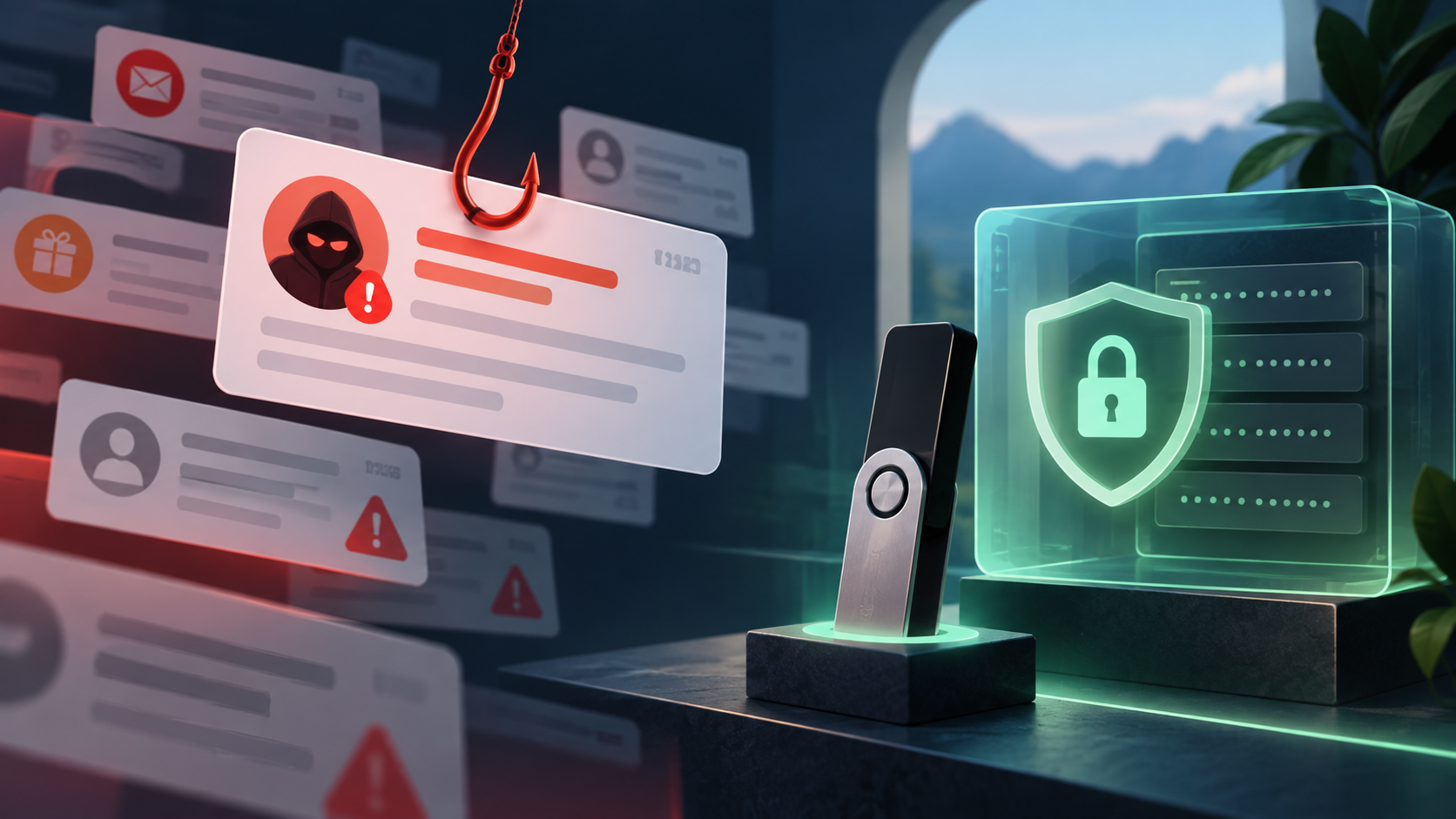
Trezor said 347,000 email addresses were targeted after an outside email platform was abused. For crypto, banking, and OTP users, urgent security alerts deserve calm verification.
BleepingComputer reported on September 11, 2026, that Trezor said 347,000 email addresses were targeted in phishing attacks after an outside email platform was breached. Trezor also said 2,500 users clicked the malicious link before the domain was taken down.
The emails copied the tone of a critical security warning and tried to push users toward a fake app that asked for wallet backup information. That urgency is the real trick. Scams often work by making people feel they must act before thinking.
Why it matters for verification
The same pattern appears in fake bank alerts, fake delivery messages, fake account-lock notices, and fake OTP requests. A message can look polished and still be dangerous. The safest habit is to slow down and verify the request outside the message that created the pressure.
BillioPlus checklist
- Never enter a recovery phrase, wallet backup, OTP, or device passcode from an email link.
- Type the official website address yourself or use a trusted bookmark.
- Keep marketing emails separate from critical account recovery where possible.
- Warn team members that support staff should never ask them to reveal a one-time code.
Source links
Tags
Chinedu Celestine Okpala
BillioPlus Team · Content & Guides