
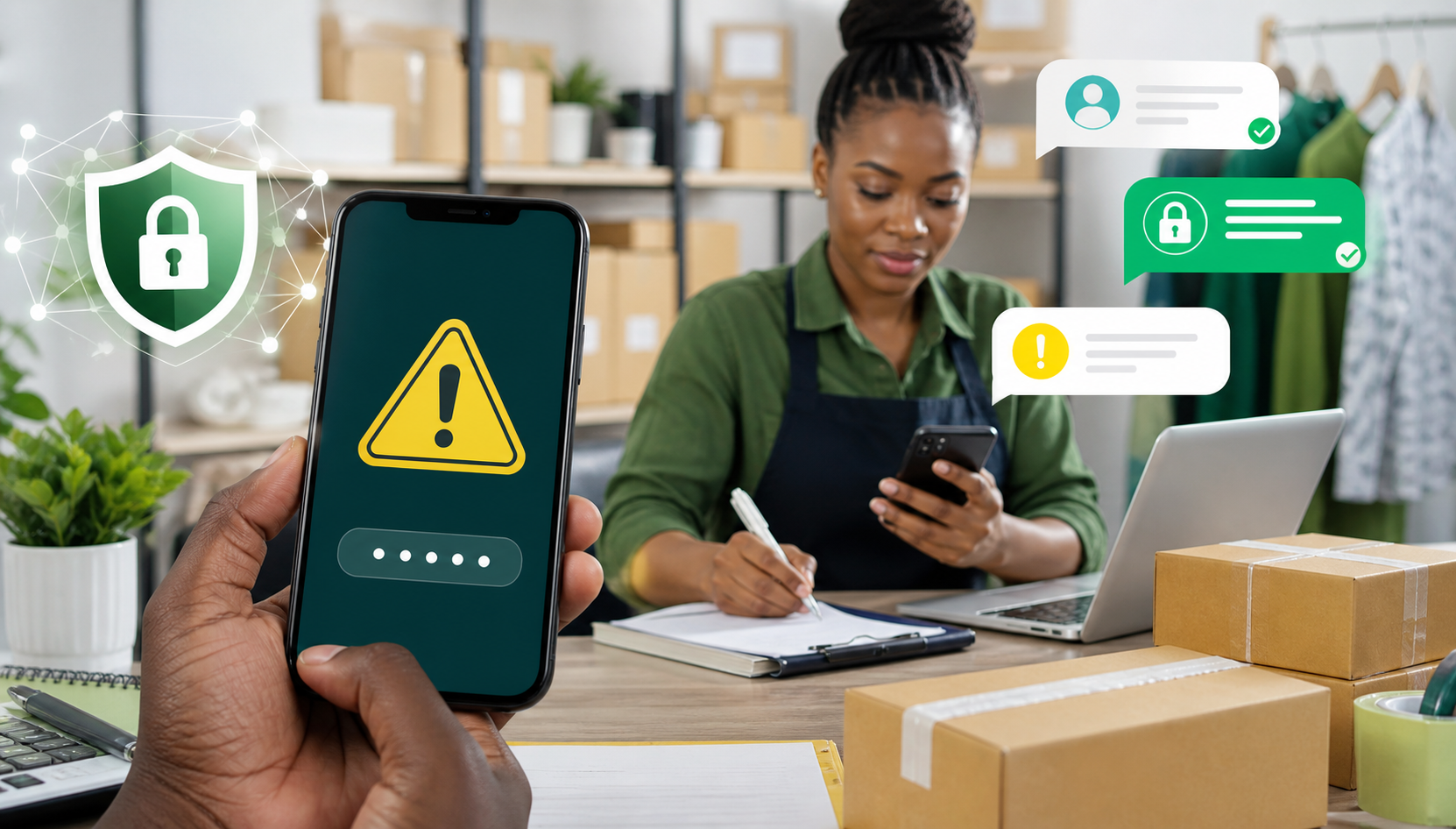
On-device scam warnings can help, but Nigerian sellers still need strict OTP habits, support-number separation, and recovery planning to prevent account takeover.
Scam detection is becoming more intelligent, but it still cannot replace user discipline. Meta's August 12, 2026 engineering note described an optional WhatsApp Scam Alert feature that runs an on-device machine learning model and keeps message classification on the device.
That kind of privacy-preserving warning can help users notice suspicious chats. But Nigerian sellers, freelancers, and small businesses still need strong habits around OTPs and account recovery.
Why sellers are targeted
Online sellers receive constant messages from customers, riders, vendors, suppliers, and payment contacts. That makes impersonation easy. A scammer can pretend to be a buyer, support agent, logistics partner, or platform representative.
The goal is often simple: create urgency, ask for a code, and take over the account before the seller has time to think.
AI alerts are only one layer
A warning can help, but the user still decides what to do. If a seller believes the fake story and shares an OTP, the protection fails.
That is why businesses should train staff with a plain rule: no customer, courier, friend, marketplace, or support agent needs your OTP. If a code arrives, it is for the person controlling the account, not for a caller.
Clean number separation helps
Many sellers use one SIM for personal calls, customer support, WhatsApp, ads, banking, and verification. That creates confusion. A better setup separates public contact from private recovery.
Use a public number for customer conversations.
Use a controlled recovery number for important accounts.
Keep staff away from private OTP inboxes.
Remove old devices from account sessions.
Review connected devices weekly.
Where BillioPlus fits
BillioPlus can help with supported verification flows where users want to avoid exposing their main SIM. It is useful for testing, privacy, and account setup where the platform allows virtual numbers.
For permanent business recovery, use a number you control long term and protect it like a business asset.
Conclusion
AI scam alerts can reduce risk, but account takeover still starts with human trust. Sellers who keep OTPs private, separate support from recovery, and review account sessions will be safer than sellers who rely on warnings alone.
Tags
Chinedu Celestine Okpala
BillioPlus Team · Content & Guides