
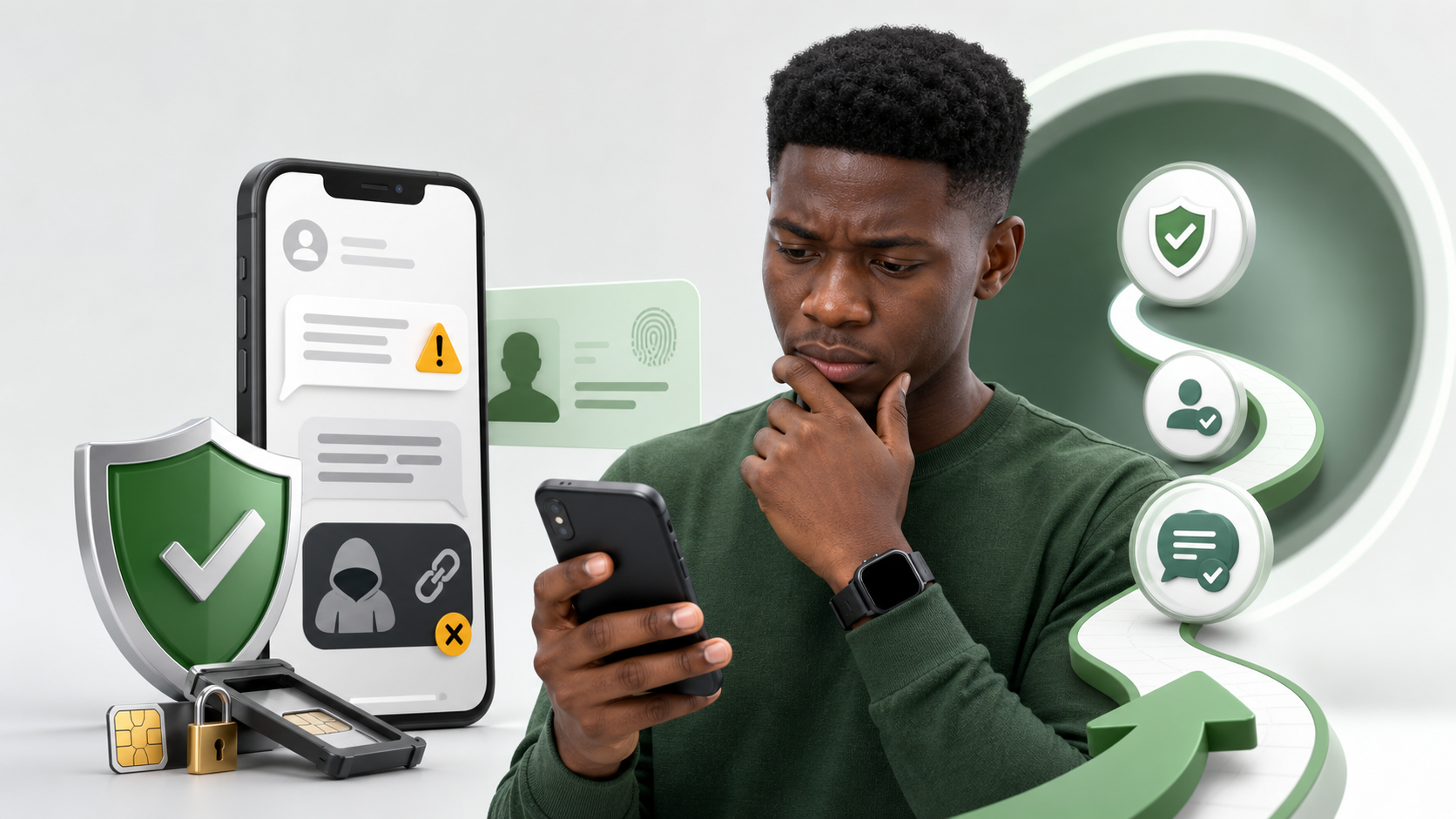
Scammers use fake NIN-SIM update messages to steal verification codes. Learn how Nigerian users can spot risky links and protect their main SIM.
Any message that mentions NIN, SIM registration, line suspension, or urgent verification can make people panic. Scammers know this. That is why fake NIN-SIM update links are becoming a dangerous way to trick Nigerian phone users into sharing OTP codes.
The message may look simple: update your details, avoid line blockage, confirm your phone number, or verify your account. The goal is usually the same. The scammer wants you to click a link, enter details, or read out a code.
Why this scam works
Phone numbers are tied to banking, social media, work tools, delivery apps, email, and online marketplaces. Losing control of a number or account can create real problems, so urgent SIM messages feel serious.
Scammers use that pressure to make users act quickly before thinking. They may ask for:
Your phone number
Your NIN or identity details
An OTP code sent by SMS
A login link or account reset code
Personal information that can help bypass recovery checks
Never share OTP codes
An OTP code is not a normal message. It is a security key for a specific action. If someone asks you to read out a code, forward a code, or type a code into a strange website, stop.
Legitimate services do not need you to give an OTP to a random caller or social media account. If you did not start the action yourself, treat the code as suspicious.
How to check safely
If you receive a scary SIM or NIN message, do not rush. Use official channels you already know instead of links inside the message.
Open the official app or website yourself.
Contact your network provider through verified support channels.
Do not use links from forwarded messages.
Do not send screenshots of OTP messages.
Do not let anyone remotely guide you through a code request.
Why privacy matters
The more often you expose your main phone number, the easier it becomes for scammers to connect your identity across platforms. Sellers, freelancers, students, and creators should be especially careful because their numbers are often public.
Using separate numbers for public contact and verification can reduce unnecessary exposure. For supported online verification, BillioPlus helps users receive OTP codes online without placing their main SIM into every signup form.
Conclusion
Fake NIN-SIM update links depend on fear and speed. Slow down, avoid unknown links, and never share an OTP code with anyone who asks for it. Protecting your main SIM starts with treating every verification code like a key.
Tags
Chinedu Celestine Okpala
BillioPlus Team · Content & Guides